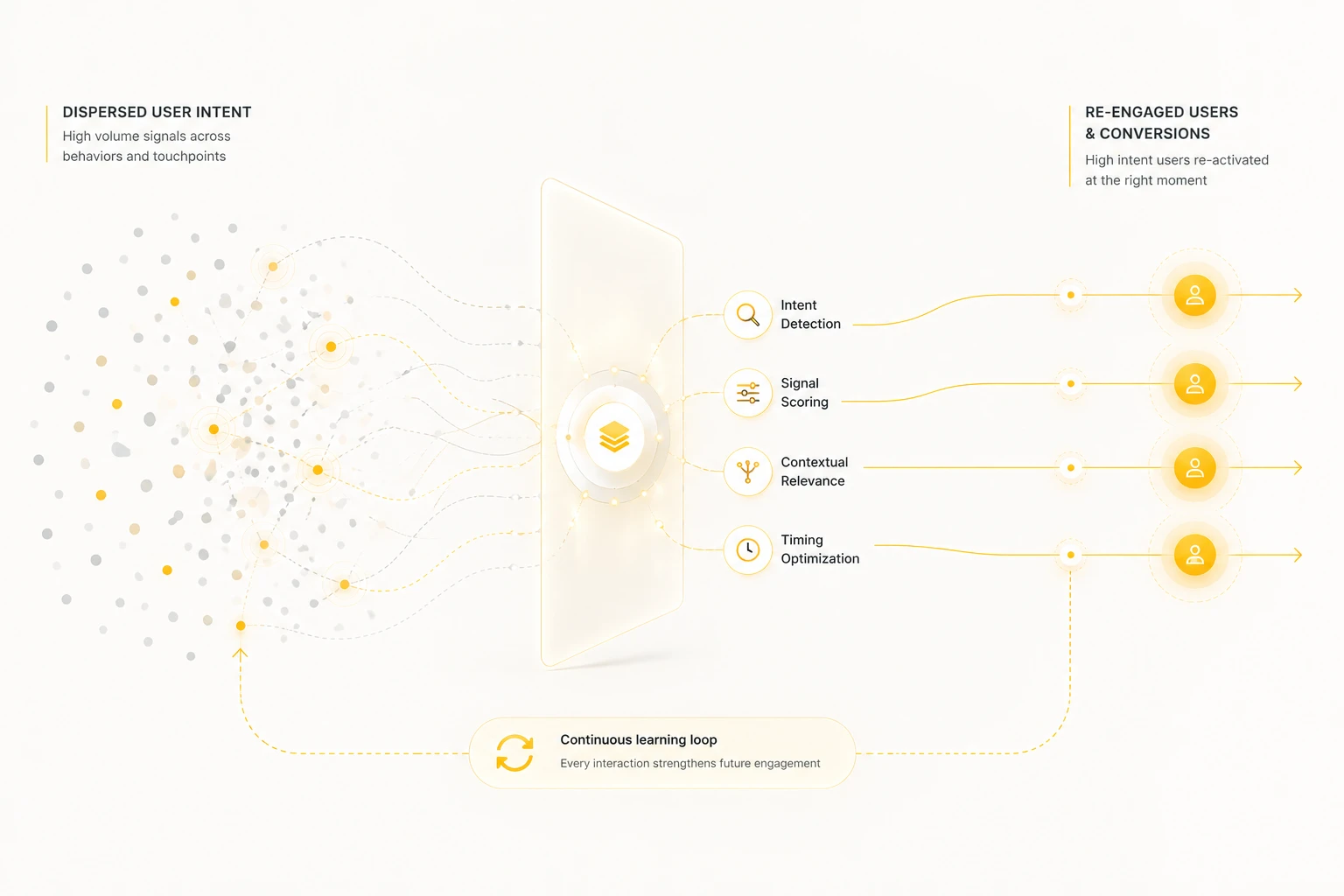
A behavior-driven re-engagement system was developed around distributed user intent within a high-volume marketplace environment.
Rather than treating traffic as a single flow, the system focused on identifying micro-intent signals across browsing behavior, where users frequently moved between categories, compared products, and delayed purchase decisions.
Instead of expanding reach, the approach centered on re-engaging users within their active browsing cycles, guiding them toward higher-conversion pathways.
Users were segmented based on behavioral patterns such as repeated product views across similar categories, price sensitivity and comparison behavior, depth of interaction within specific product clusters, and session-level engagement signals indicating purchase readiness.
These users were not approached as new traffic, but as in-market users already navigating toward a decision, requiring structured intervention to convert.
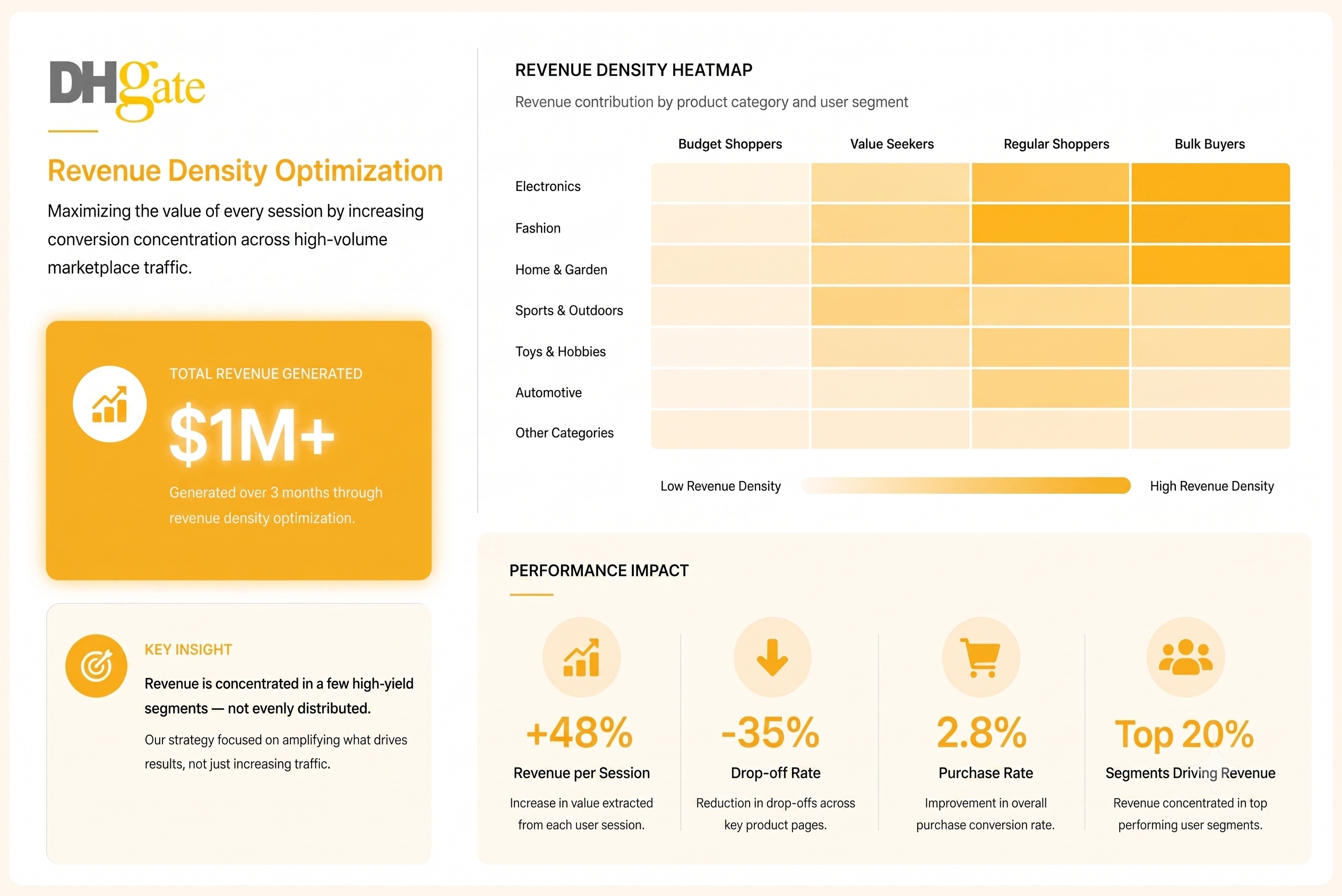
The system focused on re-engaging users within high-intent product clusters, redirecting attention toward high-yield categories and offers, and aligning product visibility and messaging with real-time behavior signals.
This shifted the strategy from broad traffic distribution to precision re-engagement within active sessions, increasing the likelihood of conversion without increasing acquisition volume.
The result was a system where growth was driven by behavioral intervention and value concentration, rather than scale alone.